By Scott Jansen
Fast.Eat.Live.
Let’s talk about carbs. That word alone has launched a thousand diet wars. Some people treat carbohydrates like they’re the devil, while others treat kale like it’s a religion. Most Americans are stuck somewhere in the middle—confused, tired, inflamed, and wondering why eating a bagel makes them want to take a nap for days.
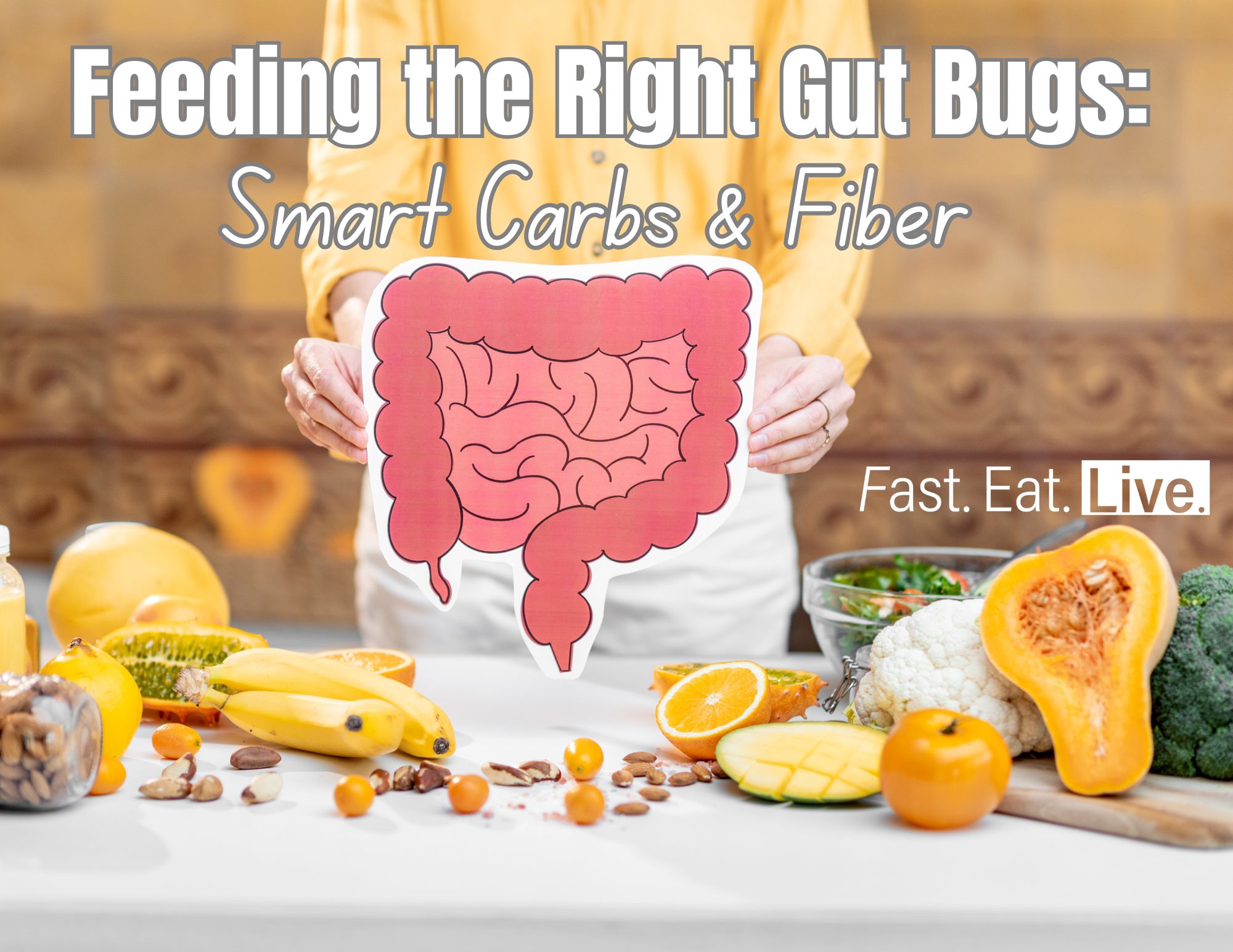
Here’s the truth: carbs aren’t the enemy, but mindless carbs are. The real conversation isn’t just about carbohydrates themselves; it’s about what those carbs are doing inside your gut. Because once you understand that connection, you level up. Fiber isn’t just roughage to help you poop—it’s microbiome control.
Welcome behind the curtain.
Your Gut Is a Garden (Not a Trash Can)
Most people eat like their stomach is a furnace: calories in, calories out. But your gut is not just a calorie-processing tube. It’s a living ecosystem, filled with trillions of bacteria that make up your microbiome. These microbes influence far more than digestion—they influence inflammation, immune function, cravings, insulin sensitivity, mood, and even brain health. You’re not just feeding yourself when you eat…you’re feeding an entire internal community.
The real question is simple: are you feeding the right bugs?
Fiber Is Not About Calories — It’s About Bacteria
Here’s what most people don’t know: humans don’t actually digest fiber. Your bacteria do. And when those microbes break fiber down, they produce powerful compounds called short-chain fatty acids, especially one called butyrate. Butyrate is gut-healing rocket fuel. It strengthens the gut lining, reduces inflammation, improves metabolic health, and supports immune balance. So, when people say, “I need more fiber,” what they often really mean is that they need a healthier internal ecosystem.
That’s the smart play.
Not All Fiber Feeds the Same Bugs
The next layer of insight is this: different fibers feed different bacteria. Fiber isn’t one single thing…it’s a toolbox. When you start understanding the categories of smart carbs and how they shape your microbiome, you gain a level of control over health, appetite, and inflammation that most people never even realize exists. Let’s break down the Smart Carb categories.
- Prebiotic Fibers: Fertilizer for the Good Guys
Prebiotics are fibers that selectively feed beneficial bacteria like Bifidobacteria. Think of them as fertilizer for your best gut bugs.
Top prebiotic sources include:
- Garlic
- Onions
- Leeks
- Asparagus
- Jerusalem artichokes
These foods help strengthen digestion, immune signaling, and gut barrier integrity. A simple coaching tip is to include these strategically on Phase 2 and Phase 3 days to keep your gut ecosystem thriving.
- Resistant Starch: The Butyrate Builder
Resistant starch is one of the most fascinating smart carb tools because it resists digestion in the small intestine and becomes food for bacteria in the colon. This is one of the primary ways you grow butyrate-producing microbes.
Best resistant starch sources include:
- Cooled potatoes
- Cooled rice
- Green bananas
- Plantains
Here’s the key: a freshly cooked potato is absorbed quickly and can act more like a fast carb. But when you cook it and then cool it, the starch structure changes into resistant starch, making it far more microbiome friendly.
Same food, different preparation, totally different metabolic effect.
- Polyphenol-Rich Plants: Diversity Builders
Polyphenols are protective plant compounds that support microbiome diversity and cellular health. These foods help combat oxidative stress, reduce chronic inflammation, and support heart and brain function. Polyphenols protect your cells from damage and may lower the risk of chronic diseases like diabetes and even certain cancers.
A simple rule of thumb is that deeply colored fruits and vegetables are often nature’s signal for high polyphenol content.
Top polyphenol-rich sources include:
- Blueberries, blackberries, elderberries
- Dark chocolate (high cacao)
- Extra virgin olive oil
- Herbs and spices
- Red cabbage and spinach
- Fermented soy like tempeh
Polyphenols are like sending your gut microbiome to the gym—more resilience, more balance.
- FEL Smart Gut Strategy: Fiber Anchors
These are the drivers of Smart Carbs—the foods that improve fullness, blood sugar stability, and long-term gut strength.
FEL gut anchors include:
- Avocados
- Broccoli
- Brussels sprouts
- Chia seeds
- Flaxseed
These foods fit beautifully into the Fast.Eat.Live. phasing system because they build metabolic flexibility without inducing cravings or energy swings.
What About Beans and Legumes?
Beans are interesting. They’re high in fiber, and they can absolutely feed beneficial gut bacteria. But here’s the full story: many people with IBS or gut dysfunction struggle with legumes. High quantities can cause bloating, discomfort, gas, and fermentation overload. Beans turn me into a whoopie cushion. Oohwee!
So, the answer isn’t “beans are bad.” The answer is that the dose matters, the person matters, and the gut matters.
Smart Carbs vs. Dumb Carbs
Smart carbs feed beneficial bacteria, improve insulin sensitivity, reduce inflammation, increase satiety, and support long-term health.
Dumb carbs do the opposite.
Ultra-processed flour, sugar bombs, seed-oil fried snacks, and “gluten-free” cookies that don’t build resilience—they feed dysfunction.
Your gut bugs know the difference. Feed sugar bugs and you crave sugar. Feed fiber bugs and you crave real food.
Final Takeaway: Feed the Bugs That Build You
Your gut is always listening, whether you realize it or not. Every meal you eat is a signal, and every fiber source you choose is either building resilience inside your microbiome or quietly feeding dysfunction. That’s why the goal isn’t to fear carbohydrates—it’s to understand them. When you choose smart carbs and fiber-rich foods with intention, you’re feeding the right gut bugs, strengthening your internal ecosystem, and supporting everything from energy and mood to appetite control, digestion, and long-term longevity.
That’s the Fast.Eat.Live. difference: nutrition that works with your body, not against it.