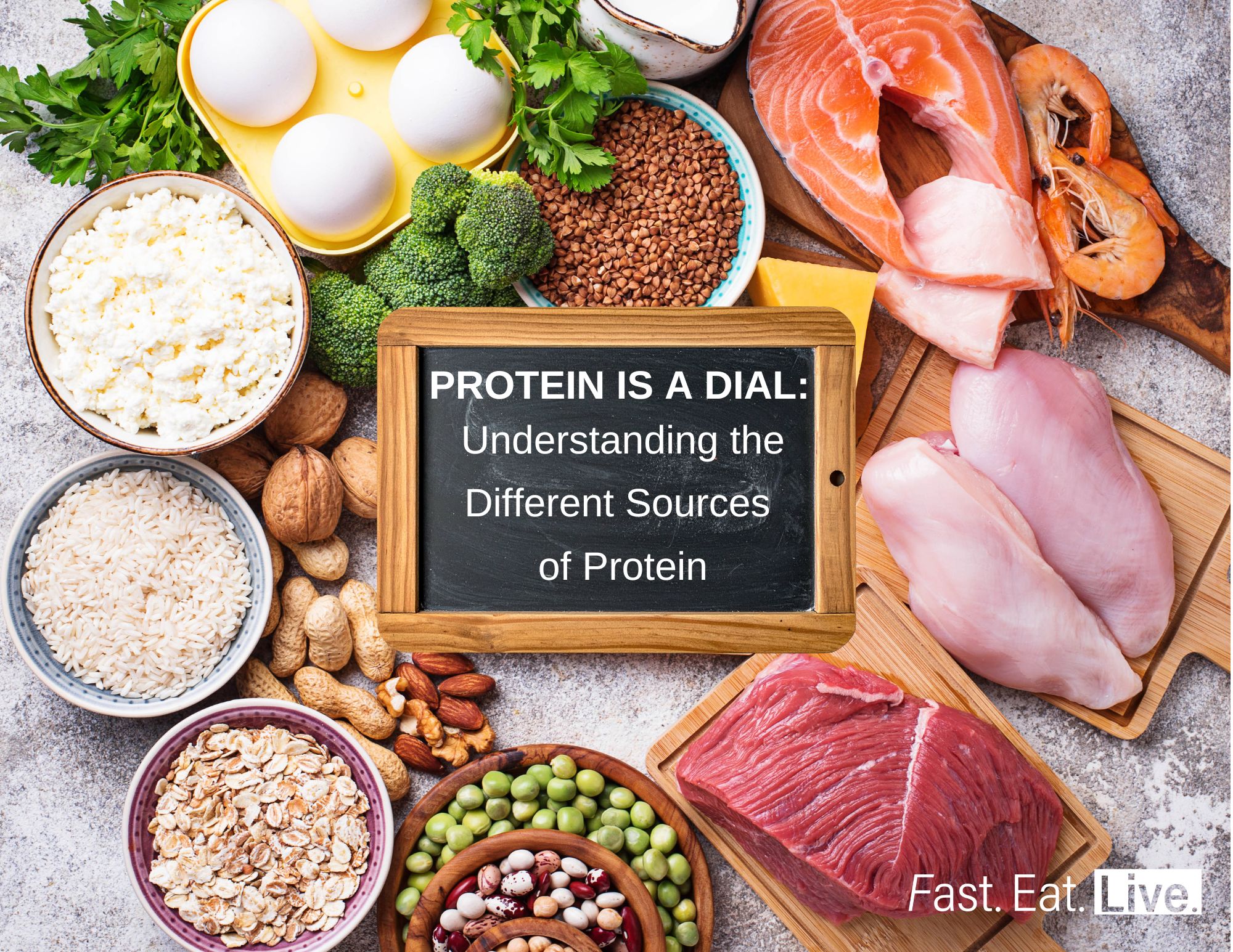
Protein Is a Dial: Understanding the Different Sources of Protein
By Scott Jansen
Fast.Eat.Live.
Americans are obsessed with protein right now. Protein shakes. Protein bars. Protein chips. Protein in everything. Protein is one of the most powerful tools we have for changing body composition, improving metabolism, building lean muscle, and staying full in a world that seems designed to keep you hungry.
But, here’s the problem: most people still don’t understand what protein actually is — or more importantly, they don’t understand that not all protein sources are the same. If you want to eat like an athlete, think like a bodybuilder or physique model, and feel like a healthy human again, you need to understand this simple truth:
Protein is not just a number. Protein is a dial.
Let’s break that down.
Why Protein Matters
Protein is the most satiating macronutrient, meaning it keeps you full longer than carbs or fat. If you’ve ever felt like you’re stuck on the “crab train” — always snacking, always hungry, always circling the pantry like a raccoon at midnight — protein is your exit ramp.
Protein supports nearly every major health and performance goal, including:
- Appetite control
- Muscle maintenance (especially as we age)
- Fat loss and body re-composition
- Blood sugar stability
- Recovery from training
- Hormone signaling
Protein is the foundation. But the source is where the real story begins.
Animal Protein vs. Plant Protein: The Full Story Matters
There’s a lot of noise today about plant-based diets. I’m not here to throw tomatoes at anyone. Plants have a role — especially for fiber, antioxidants, and microbiome diversity. But when it comes to protein, animal proteins are simply different.
Animal proteins tend to be more bioavailable, meaning your body absorbs and uses more of what you eat. They provide complete amino acid profiles, higher leucine content (the key muscle-building trigger), and more nutrient density per bite. That’s why athletes, bodybuilders, and people trying to get lean almost always anchor their nutrition with animal protein.
Plant proteins, on the other hand, often come with lower protein density per serving, more carbohydrates, and more digestive burden — especially with legumes. Many plant sources are incomplete unless carefully combined, and here’s the big one:
You usually need to eat a lot more volume of plant food to match the protein in animal food.
That matters because so many people today are dealing with IBS, bloating, gut inflammation, food sensitivities, and chronic digestive stress. So telling someone to “just eat more beans” is not always helpful. Sometimes the answer is simple:
Eat a smaller amount of a higher-yield protein source.
That’s coaching.
Protein Density: A Simple Comparison
One of the easiest ways to understand protein is to compare common sources side by side. All values below are based on 100g uncooked portions from your Fast.Eat.Live. reference material.
Protein Is a Dial. Article
Chicken Breast (Lean Classic)
- 165 calories
- 23g protein
- 0g carbs
- 3g fat
Chicken is the king of lean re-composition. High protein, low fat, and an easy dial setting for fat loss.
Salmon (Performance + Omega-3 Power)
- 182 calories
- 22g protein
- 0g carbs
- 10g fat
Salmon is protein plus brain fuel. A little higher in fat, but elite nutrient density and recovery support.
Eggs (Nature’s Multivitamin)
- 155 calories
- 13g protein
- 1g carbs
- 11g fat
Eggs are amazing, but they’re fattier. That’s not bad — it just means eggs are a different dial setting. More maintenance, more strength season, less “cutting phase.”
Tofu (Plant-Based Example)
- 76 calories
- 8g protein
- 2g carbs
- 5g fat
Tofu can work, but notice the difference: to match the protein in chicken, you’d need almost three times the amount. That’s a lot more volume and digestion.
The Bodybuilder Secret: Protein Is a Dial
This is one of my favorite coaching truths: bodybuilders don’t just “eat protein.” They select protein like an artist selects paint. Protein sources come with different fat levels, calorie density, and satiety effects, and the best athletes adjust based on their goals.
Lean Protein Dial (Fat Loss + Re-composition)
Choose:
- Chicken breast
- Turkey
- White fish
- Shrimp
- Ahi tuna
Ahi tuna is a perfect example: 29g protein with only 130 calories per 100g. That’s pure efficiency.
Higher-Fat Protein Dial (Strength + Maintenance)
Choose:
- Ribeye
- Whole eggs
- Salmon
- Ground beef
These support hormones, recovery, and strength. But if your goal is fat loss, you may need to turn the dial leaner.
Protein and Hunger: The Most Underrated Tool
If someone tells me, “Coach, I’m always hungry…” my first question is almost always: How much real protein are you eating?
Protein shuts down cravings. It stabilizes appetite hormones. It helps you stop feeling like you need a snack every two hours. Most people aren’t overeating because they’re broken — they’re overeating because they’re under-proteined.
The Coaching Takeaway: Choose the Right Protein for the Season
Here’s the Fast.Eat.Live. mindset: you don’t need perfection. You need awareness.
Ask yourself:
- Am I trying to lean out? → go leaner
- Am I training hard? → add fattier performance proteins
- Is my gut struggling? → choose high-yield animal proteins over heavy legumes
- Do I feel hungry all day? → increase protein at breakfast and lunch
Protein is a dial. Turn it with intention.
Final Thought
In a world full of confusion, protein is one of the simplest anchors you can build your health around. But don’t just count grams. Understand the source. Understand the yield. Understand the dial.
Because when you do, you stop eating like the average American… and you start eating like someone who’s finally in control.
That’s Fast.Eat.Live.